
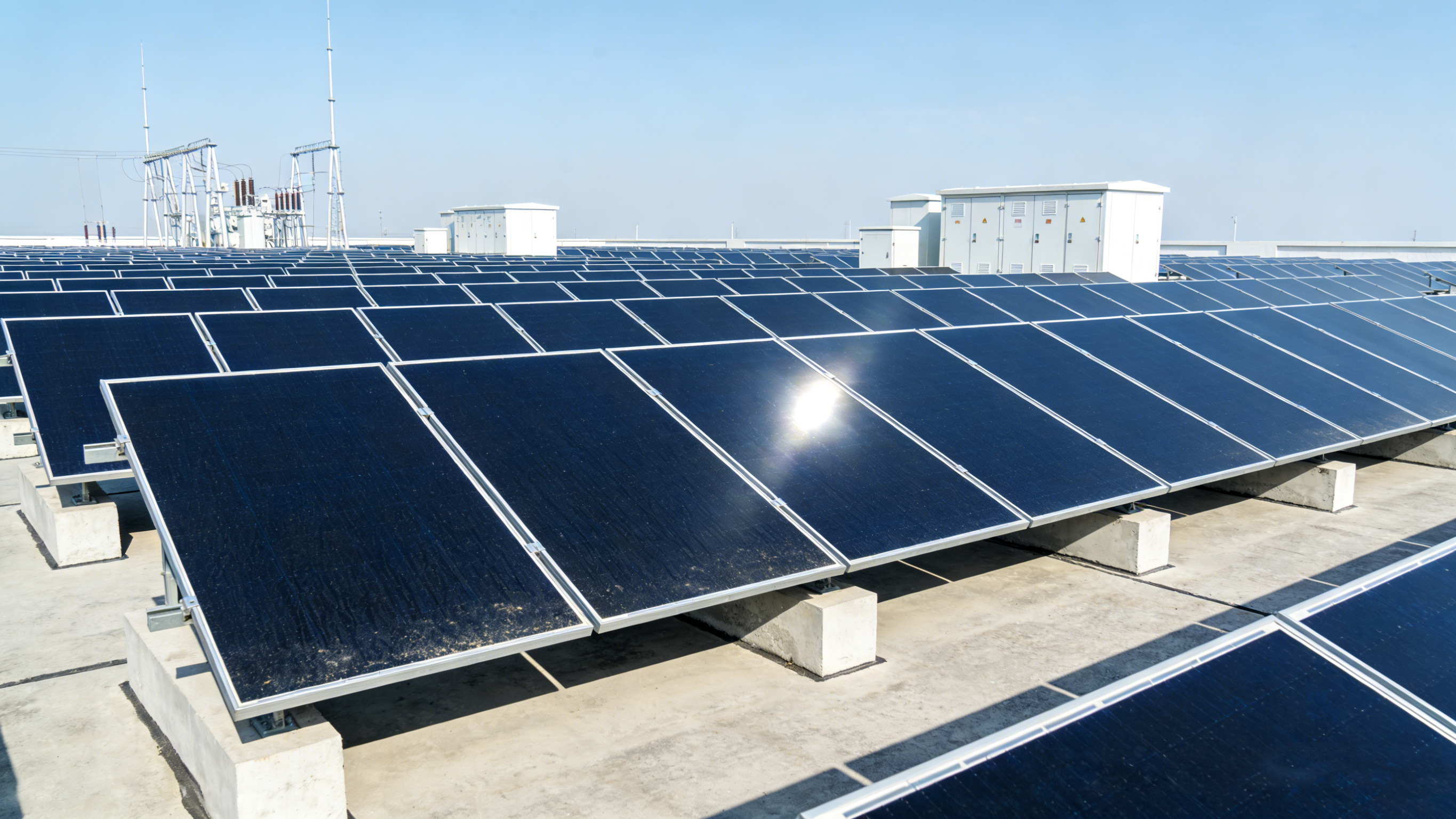
Sharpening Your Tools for Success: An Essential Equipment List for PV Plant O&M
With the rapid development of the photovoltaic (PV) industry, solar power plants have become a cornerstone of energy supply. However, many investors and managers fall into a common trap: viewing a PV plant as an "install-and-forget" asset. In reality, facing complex climates, strict grid standards, and high labor costs, the operation and maintenance (O&M) of PV plants present significant challenges.
To maintain a PV plant effectively, relying solely on the naked eye and a wrench is far from sufficient. We need to construct a three-dimensional equipment system ranging from "macro monitoring" to "micro diagnosis" and "efficient cleaning."
The "Far-Sighted Eye": Intelligent Monitoring and Drone Systems
For large-scale ground-mounted plants or distributed clusters, manual inspection is prohibitively expensive and inefficient. Therefore, the first line of defense must be digitalization and automation.
- Intelligent Monitoring Platforms and Data Loggers: This is the "brain" of the power plant. The biggest pain point in O&M is often "information lag." An IoT-based monitoring system collects real-time data from inverters, meters, and environmental sensors. It not only displays current power generation but also uses algorithms to detect anomalies, such as voltage irregularities in a specific string or low inverter efficiency. This is the foundation for achieving "unmanned" or "minimally staffed" operation.
- Industrial Drones (Equipped with Infrared and RGB Cameras): In large-scale projects, drones have become standard. Traditional manual inspections struggle to detect hot spots or micro-cracks in elevated areas. Drones equipped with dual-light cameras can scan dozens of megawatts in a short time. They use infrared thermal imaging to rapidly lock onto temperature anomalies (hot spots) and visible light lenses to identify physical damage or vegetation shading. This significantly reduces safety risks and boosts inspection efficiency.
The "Stethoscope": Precision Testing and Diagnostic Instruments
When the monitoring system triggers an alarm or power generation drops for unknown reasons, O&M personnel must go on-site with professional handheld devices for "pathological analysis."
- Infrared Thermal Imager: This is the O&M technician's "stethoscope." During operation, diode shorts, cell micro-cracks, or poor junction box connections can cause localized overheating. A thermal imager visualizes these temperature anomalies, helping personnel locate faults quickly without touching high-voltage equipment.
- I-V Curve Tracer: This is the core device for judging a module's "health." I-V curve tracers can plot the current-voltage curve of a module under outdoor sunlight, precisely determining if there is power degradation, high series resistance, or insulation failure.
- Insulation Resistance and Ground Resistance Testers: Electrical safety is paramount. Insulation failure leads to power loss and poses fire or electrocution hazards. These testers are used to regularly check the insulation performance of DC cables, modules, and inverters, as well as the reliability of the grounding system, ensuring compliance with safety regulations.
- Electroluminescence (EL) Tester: This is a more in-depth tool, similar to a hospital "CT scan." By applying a reverse voltage, it causes the module to emit light, revealing invisible internal micro-cracks, broken grids, or black cells. It is indispensable for handling complex warranty claims or analyzing module aging.
The "Beautician": Efficient Cleaning and Physical Maintenance Tools
The efficiency of a PV plant depends directly on light transmittance. Whether in dusty regions or areas prone to bird droppings and pollen, the choice of cleaning equipment is critical.
- Professional PV Cleaning Robots or Soft-Brush Washing Equipment: Unlike car washing, PV modules have special anti-reflective coatings that严禁 (strictly prohibit) hard scraping or corrosive cleaners. In scenarios with high labor costs, automated cleaning robots are becoming popular. Generally, using deionized water with soft rollers or silicone squeegees is the standard operation to remove dust without leaving water marks.
- Torque Wrenches and Fastening Tools: PV plants are exposed to the elements, causing bolts to loosen over time. Regular mechanical fastening is key to preventing支架 (support structures) collapse or module detachment. Torque wrenches ensure that every connection point meets the manufacturer's specifications, avoiding damage from over-tightening or poor contact from looseness.
Conclusion
Effective daily maintenance of a PV plant is essentially a game against time, the environment, and the laws of physics.
From macro drone patrols to micro I-V curve analysis and daily精细化 (refined) cleaning, every piece of equipment safeguards the asset. Equipping yourself with these professional tools is not just about fixing faults; it is about countering module degradation, environmental erosion, and grid fluctuations over a 25-year lifecycle to maximize investment returns. As the saying goes, "A workman must first sharpen his tools if he is to do his work well"—this is the eternal truth of PV O&M.